
Breaking the Anchor
"Ships are safer at the shores but they are not made to stay there."

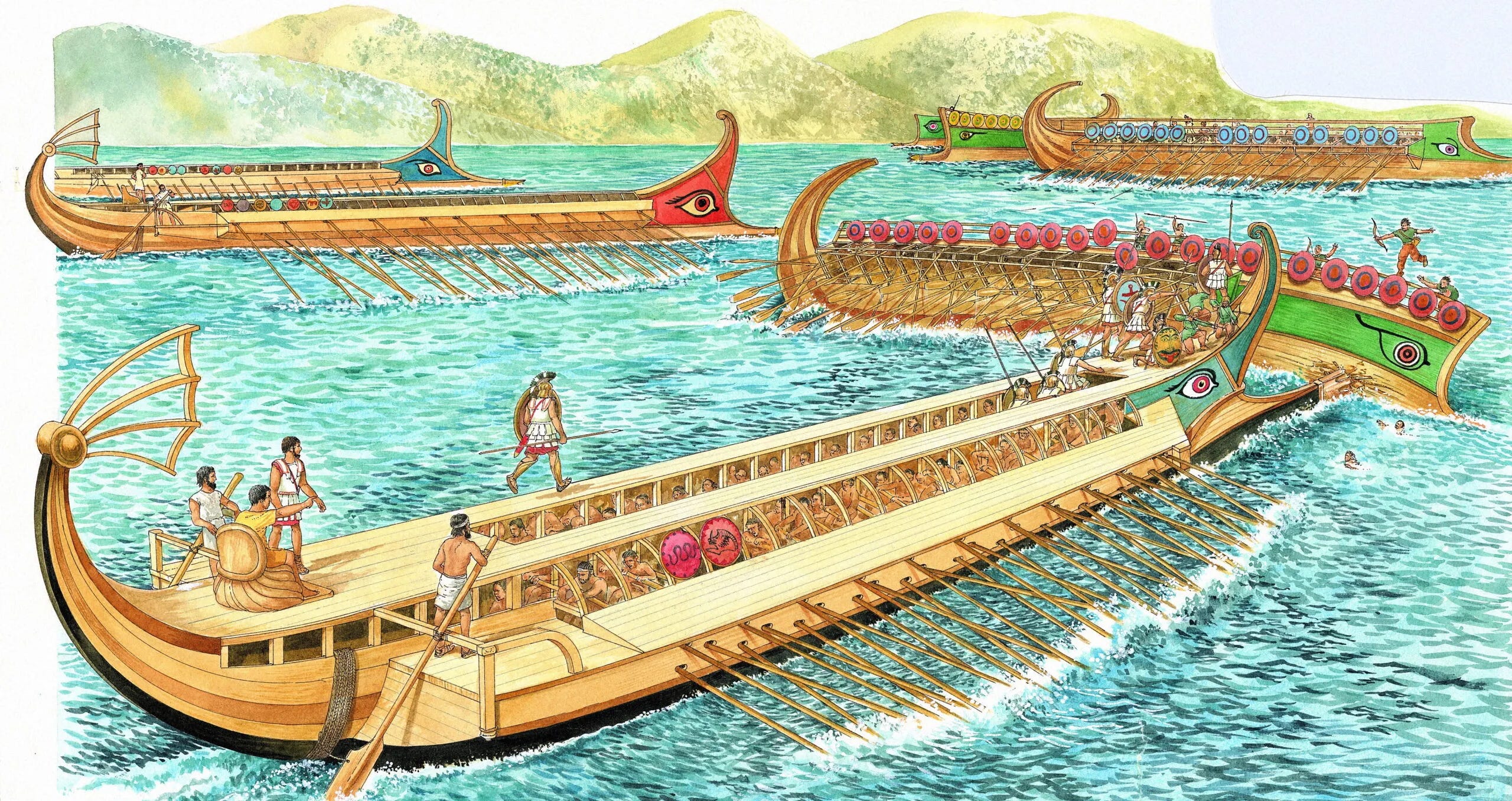
An interesting thought experiment could be to think of our lives and ourselves as ships. Religions and ways of looking at the world are anchors that keep you steady and stable.
Sometimes, rarely, we gather the courage to go out to sea, move forward a little bit but then easily get scared and drop the anchor to stay safe again. The seas are very rough and treacherous so this is understandable, it is good to have an anchor that can give you stability when things get too rough.
But we tend to abuse this. Some of use stay too safe and some of us never use the anchor and just sail until they crash their ship.
As with everything, a balance is necessary. Sometimes you need time to think about your next course and a point of reference such as a religion could be good to have.
Peter Kingsley’s book Reality shattered all my anchors, something I am still recovering from. He shattered them to pieces until I had to learn to stear the ship myself. At first, this was exciting and I felt a naive almost egotistical sense of exhiliration thinking “My god, I have discovered something no one else has! How exciting! How beautiful the waves, and the fishes around me, like nothing I have seen before. I have to tell people about this!”
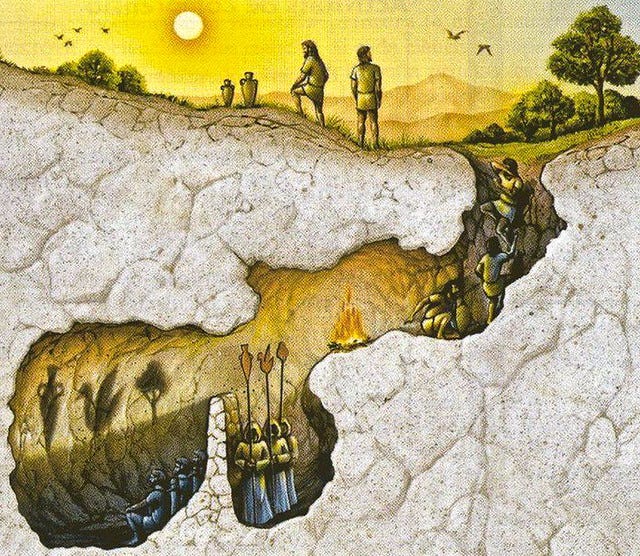
I sure felt like the man who had left Plato’s cave, with a sense of self-importance feeling that he should tell everyone around about the things he has seen.
Soon enough though, I started approaching new land. But this land was a mountainous dangerous zone. (Pay attention here) I couldn’t actually see what was on the land itself due to its height, I could only see the side of the mountains. I knew something beautiful was on top, but were I to journey there I’d have to risk crashing the ship and climbing up, or worse; crash and be swallowed by the depths.
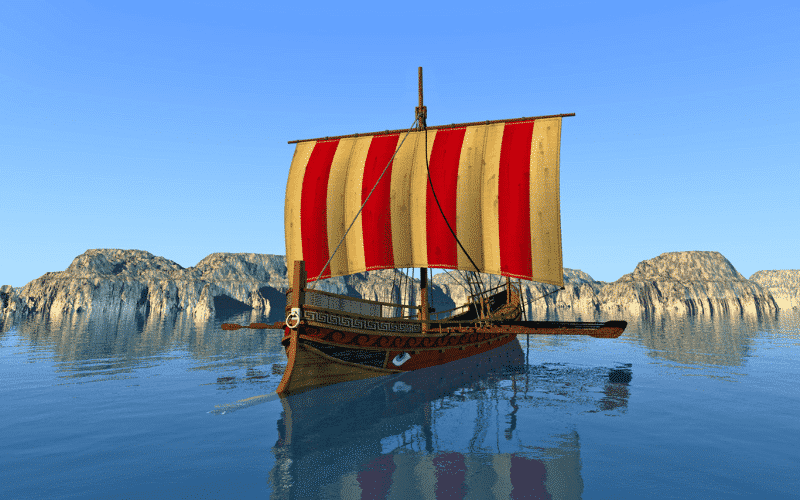
I could not take this risk, I was far too scared to sink.
To use real life terms for what I’m describing here, this feeling of fear of crashing led to multiple psychotic breaks in the past year where I thought I was losing my mind and going crazy.
This feeling is almost indescribable. I can go about my day doing everything normally, but then in an instant, my mind feels like gravity is suddenly gone and I am floating upwards into a void space with nothing solid to hold on to. Perhaps you’ve felt this feeling in a dream sometime, maybe when you were a child. Where within the dream, if you didn’t pay attention enough and stick your feet to the ground; you would just simply float up and die and wake up in your bed. But real life is real life and there is no waking up when I float up except for dying maybe. And I’m too scared of that.

I’m clearly not ready to sail yet. I don’t have enough Mêtis.
Μῆτις Mêtis in Greek myth is an Oceanid, a daughter of the Titan Oceanus. Also the first wife of Zeus who helps him defeat his father Cronos, who ate all his children for fear of them overthrowing him (the ego scared of letting new ideas and perspectives take over old ones).
Mêtis is also a term used for “cunning”, “skill”, “the ability to deceive and not be deceived”. This is a term Kinglsey goes into great detail about in Reality.
It takes a great amount of this skill of deceiving without being deceived to be able to live this illusion of life consciously to the fullest without getting sucked into it. It is also, fittingly, a term used for people who are very good at sailing ships. Always attentive, not missing a single detail, looking for roadsigns, and the stars to know exactly where they are.
It took a bit of humility to admit that I don’t have this cunning sense of attentive perceptiveness.
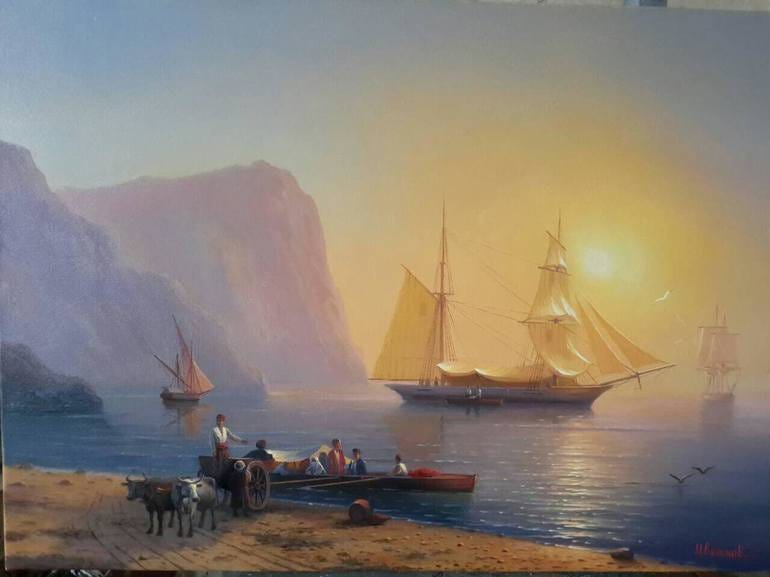
So I sailed back to familiar shores.
But nothing seemed familiar and satisfying anymore. I tried to buy a new anchor but nothing would do. It all seemed bland. Lifeless. Fake. Nothing made sense. No matter how hard I tried to explain to people what I’ve seen and experienced, it felt like no one understood. Some did, some I thought they did but then it turned out they may not have. I didn’t even bother talking to people who are so used to the shore that they’re unaware or disbelieving of there evn being anything outside it.
If you want something done right, you have to do it yourself. So I’m building my own anchor right now. From parts I’ve found scattered all around throughout my journey.
Yes, this means I am making my own religion, as heretical as that might sound to some people. I see the beauty now in all religions. After experiencing some form of Truth thanks to Kingsley, I now see that truth in all creeds and religions. Though with some, you have to dig deeper to find it. It’s still there. And sometimes I wonder about people who follow their religions “How can you not see? How can you not see what they meant? How did you turn something so beautiful and honest into dogma?”
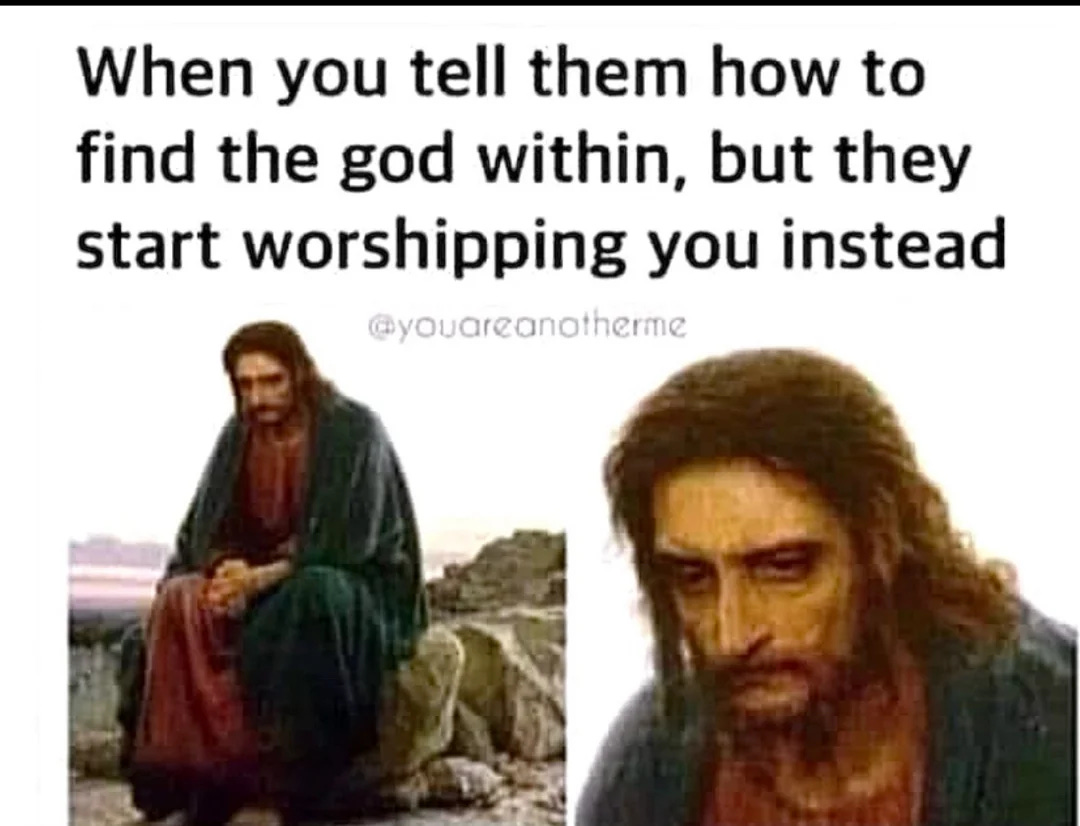
So I’ve taken up a project of writing a sort of “holy text” based on and inspired mostly by Hermetic texts of philosophy. I have already written a creation myth (if you know me, you know my fascination with Creation) that I am quite satisfied with. And I am writing more chapters to expand on my beliefs and ways of seeing the world.
I will be sharing these here on substack and perhaps they will resonate with some people, perhaps not. This project will be the result of over a decade of trying to find the truth behind all religions. Recently since I’ve started to follow my own tenets, I’ve been going out of my comfort zone alot more. I have always wanted to be helpful and help people, but my social anxiety tended to stand in the way.
So for example, if I saw an old lady stepping onto the bus, I wouldn’t dare to stand up and give her my spot, lest she look at me weird (some have done this, I live in Sweden after all) or other people around start to stare at me. Or if a man seems stuck on the side of the road, I would like to ask if he needs help with something but I would always drive on.
But now, the strength of my belief in My God and the fact that He would want me to do these things, for all creatures are His creation, is great. This strength outdoes the strength of any social anxiety. So recently I have found myself in situations like none before. Asking that man on the side of the road if he needs help. Driving complete strangers to the pharmacy so they can get their medicine. Helping some people move a car that is in the way to a different spot, then calling the police when it turned out it may have been stolen.
These might be silly things that are easy to do for some people. But for me it hasn’t before. I would always just walk on.
I will be writing more in depth about this way of life in time but for now the easiest way to explain how I want to live is that I follow the example of (amongst other people) Bayek of Siwa from the video game Assassin’s Creed Origins.
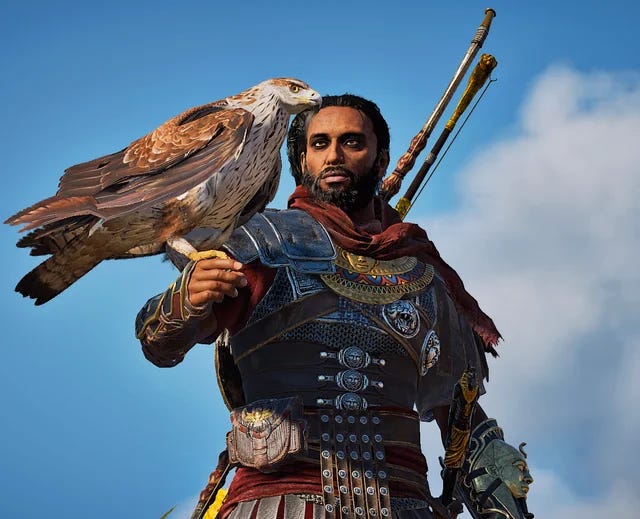
I am a Medjay.
I am a feather in the eagle’s wing… a living dagger, plunged from the sky into the heart of chaos.
I am a truth unknown… a scabbard unfilled… a son of the Nile… and a defender of the people.
You cannot kill me, for I walk among the dead. Come forth by day, and I will guide you home.
- Bayek of Siwa, Prayer of the Medjay
Bayek is a Medjay, Medjays were originally protectors (almost like bodyguards) of the Pharaoh. In the game, they turn the “job” of the Medjay into a sort of Protector of the people. And this, Bayek takes very seriously. He stops whenever anyone seems distressed or like they need help and unquestionably helps no matter what it’s about. Sometimes even when he’s got more pressing matters (such as avenging the death of his son) at hand, he still stops, puts away his personal life and is simply “a feather in the eagle’s wing” “a truth unknown”.
In terms of gameplay, this is a perfect way of integrating side quests into the game in a believable way. But it’s also quite inspiring.
“As I must” is something Bayek tells a character who asked him for help early in the game. He says it in a somewhat annoyed tone but also with conviction in his voice because he truly must do it in order to serve his god Amun. It’s all fine and dandy helping people when it’s exciting and new and feels good. But it’s when it initially feels like a chore and I don’t really want to do it that I try to remember that phrase “as I must”.
This “building of a new anchor” is no defeat on my part. For in Kingsley’s interpretation of Parmenides’ poem, his Goddess tells Parmenides that as a rule beliefs are worthless and utterly unreliable. But she then goes on to explain how, paradoxically, they can come to possess a certain reliability if they meet one specific condition.
This condition is that they have to “be able to travel through all there is, all the way through everything, right to the end.” To travel all the way through until coming to the other side, to keep going as far as one can until arriving at the futhest edge and limit of all there is.
Perhaps my “new religion” won’t pierce trough all there is to the other side but then he also says: “if you are not yet ready to discover what lies behind your humanity the next best thing, the most important thing, is to become a good human being”.
In the meantime, I will practice my Mêtis. If I know what’s good for me, I will try my best to gather as much Mêtis as possible so that the next time The Godess shatters my anchors, I may have a chance to sail (at least a little longer).
Or perhaps I may even get to a point where I can hoist the anchor myself and sail willingly.
Peace be with you friends who have read this far. I hope you find your way no matter what.